About Ev Platt
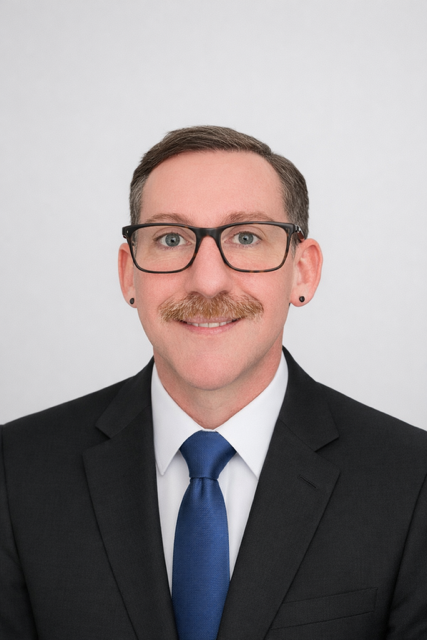
Ev Platt is an independent genealogical and genetic genealogy researcher whose work spans both his paternal and maternal ancestry across North America and Europe. His research combines original documentary sources, historical reconstruction, collaborative genealogy, and DNA evidence to investigate long-standing family traditions, resolve conflicting pedigrees, and preserve the lives of the people behind the records.
Rather than concentrating on a single locality or surname, Ev’s work follows families across generations, borders, migrations, and changing identities. Particular attention is given to difficult ancestral problems in which published genealogies and online family trees conflict with primary records.
Paternal Research
A major focus of Ev’s work is his paternal Piatt/Pyatt/Peatt/Pyeatt/Platt ancestry and its origins in the seventeenth and eighteenth centuries.
His direct paternal research reaches back toward René Piatt, c. 1649–1705, associated with the early Huguenot and colonial New Jersey story of the family. Ev has undertaken extensive work to reconstruct the generations between René and his later American descendants, following the family through New Jersey, New York, Pennsylvania, Virginia and present-day West Virginia, Ohio, and beyond.
One of the central questions in this research concerns the ancestry of Lewis Piatt Sr. (1766–1851). Older genealogies traditionally placed Lewis within a different Piatt branch, but Ev’s documentary and genetic research has led him to investigate an alternative working reconstruction:
René Piatt → Thomas Piatt → James Pyatt → John Pyatt → Lewis Piatt Sr.
The proposed relationship between John Pyatt and Lewis remains an active research question rather than a closed conclusion. Ev’s work deliberately distinguishes between established relationships, probable conclusions, and ancestral traditions that still require proof.
His paternal research also extends deeply into Westchester County, New York, particularly Pound Ridge, Cross River, and Salem, where Piatt families interacted with families such as the Averys. Individuals including Ruth Piatt and Lemuel Piatt form part of a broader effort to understand the movement of the family from earlier New Jersey communities into colonial and post-Revolutionary New York.
Huguenot ancestry forms another important component of this work. Ev’s ancestral research includes René Piatt as well as Bourgon Broucard and Catherine le Fevre, from whom he descends through multiple ancestral paths. These investigations encompass variant surnames such as Broucard, Brocard, Brokaw, Bragaw, le Fevre, and Lefebvre, and follow French Protestant families through continental Europe and into colonial America.
The Huguenot project is not simply an effort to extend a pedigree as far into Europe as possible. Ev places particular emphasis on separating documented European ancestry from attractive but unsupported pedigrees, using church registers, marriage records, land records, probate material, and migration evidence to determine which connections can actually be defended.
Maternal Research
Ev’s maternal research is equally extensive and includes some of the most deeply interconnected families of Bedford County and south-central Pennsylvania, while also following those families wherever migration carried them.
Major families under study include Ickes, Allison, Mock, Corle, Dibert, Earnest/Ernst, Burket, Claycomb, Knee, Imler, Fetter, and numerous related lines.
This research has involved the reconstruction of family networks using civil records, church registers, deeds, probate records, newspapers, cemetery records, photographs, local histories, military records, and historical publications.
One current project concerns Ev’s strongly supported descent from Eva Catharina, remembered in Bedford County history as “Indian Eve.” The working documentary lineage proceeds through her son Henry Ernst/Earnest, his daughter Anna Maria Susanna Margaretta Earnest, and subsequent generations of the Dibert, Burket, Claycomb, Knee, Ickes, and Allison families.
That investigation has also demonstrated the importance of revisiting older genealogies. Research into the Earnest family has required distinguishing Johannes/John Earnest from his brother Henry Earnest, reconstructing Henry’s Westmoreland County household from Lutheran baptismal records, and questioning later claims that are not supported by contemporary evidence.
Ev’s maternal work therefore extends beyond collecting ancestors. It seeks to reconstruct families as communities, examining how people moved, married into neighboring families, practiced their faith, worked their trades, and remained connected over generations.
DNA & Genetic Genealogy
Genetic genealogy is an integral part of Ev’s research and is used alongside—not in place of—traditional documentary evidence.
On the direct paternal line, Big Y-700 testing places Ev within Y-DNA haplogroup R-FTB88866, downstream of R-FT19913. Y-DNA is being used to evaluate competing hypotheses within the Piatt/Pyatt/Platt family and to identify relationships between branches whose paper records become uncertain in the eighteenth century.
Ev also works extensively with autosomal DNA, comparing shared centimorgans, chromosome segments, clusters of matches, and multiple ancestral pathways. Because many of his Pennsylvania families intermarried repeatedly, his research also addresses the effects of pedigree collapse and multiple relationships, recognizing that a DNA match may reflect more than one shared ancestral line.
His direct maternal mitochondrial DNA belongs to haplogroup T2c1f. Full mitochondrial sequencing and exact matches are being used to investigate the origins of maternal ancestors whose identities remain uncertain in the documentary record.
X-DNA is another area of particular interest. By mapping the restricted inheritance patterns of the X chromosome against documented pedigrees, Ev uses X matches to eliminate impossible ancestral pathways and identify lines worthy of closer study.
Across all forms of DNA research, his standard remains the same: DNA is evidence, not a substitute for genealogy. A genetic match becomes most meaningful when it can be placed within a well-documented historical pedigree.
Research Philosophy
A recurring theme in Ev’s work is the re-examination of inherited genealogy.
Nineteenth- and early twentieth-century family histories are often invaluable because their authors had access to people, family Bibles, letters, and traditions that no longer survive. At the same time, those works can contain merged individuals, incorrect maiden names, misplaced children, unsupported European ancestries, and family traditions repeated as fact.
Ev therefore approaches older genealogies with both respect and scrutiny.
When contemporary evidence disagrees with a published pedigree, the discrepancy becomes a research question rather than something to be quietly ignored.
Much of his work is shared through WikiTree and collaborative genealogy, where he creates and improves sourced profiles, reconstructs families, preserves photographs and historical material, documents DNA findings, and uses research notes to make unresolved questions visible.
The site documents paternal and maternal ancestry, Huguenot migrations, colonial families, American migration, DNA research, historical photographs, original documents, biographies, unresolved genealogical problems, and new discoveries.
Its purpose is not merely to answer the question:
“Who were my ancestors?”
It also asks:
Who were these people? Where did they come from? What evidence connects one generation to the next? And how much of what has been repeated about them can actually be demonstrated?
For Ev Platt, genealogy is not the collection of names on a tree. It is the reconstruction of lives—and the preservation of their stories with enough evidence that future generations can understand not only what we believe, but why we believe it.
